
Endoluten (Pineal Bioregulator) Dosage Protocol
A natural peptide complex extracted from animal pineal gland, sold as an oral "Cytomax" bioregulator. The studied science belongs to its defined pineal analogs — the preparation Epithalamin and the synthetic tetrapeptide Epitalon — not to this specific extract, whose exact composition is proprietary. Russian-registered as a parapharmaceutical; not a drug and not FDA-approved.
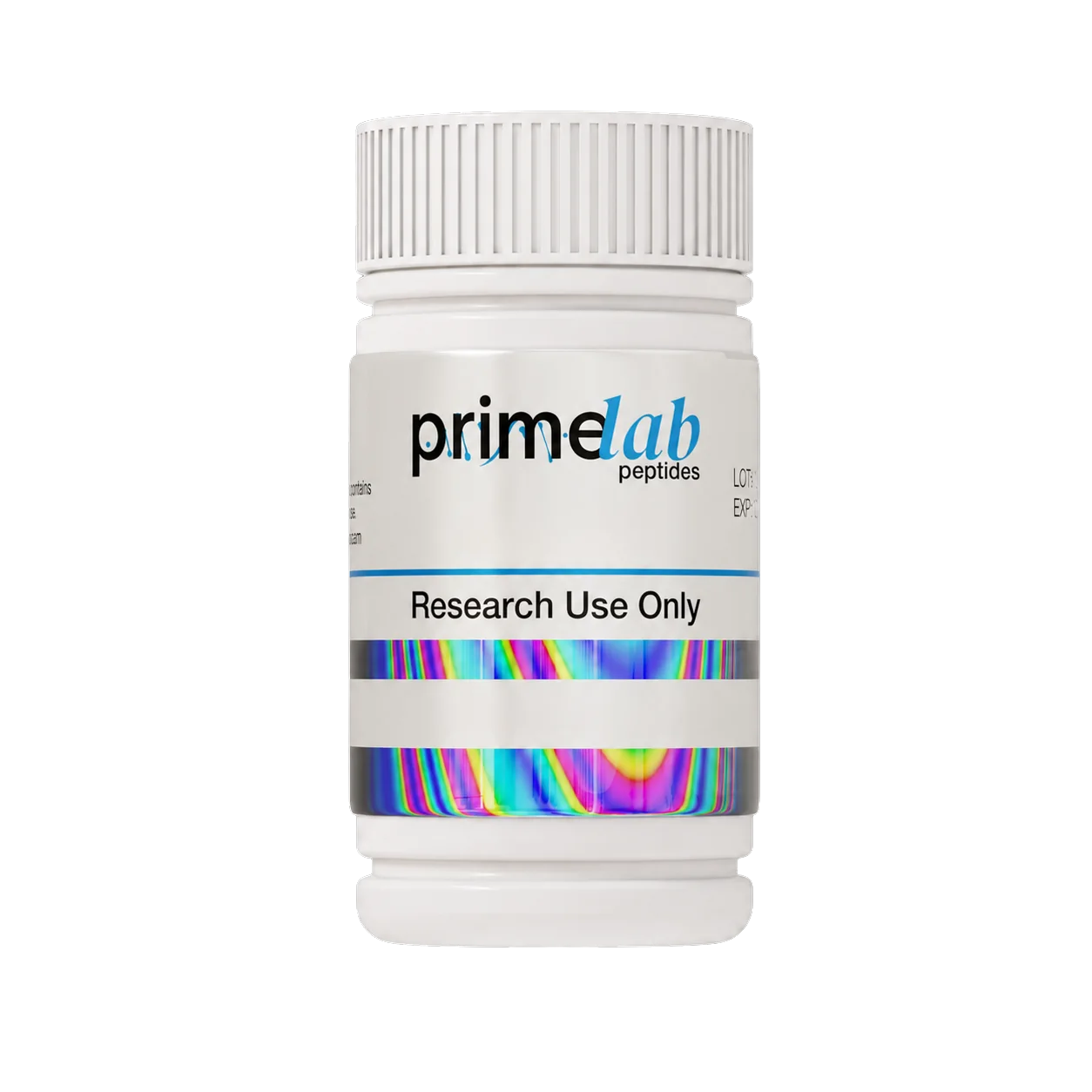
A natural peptide complex extracted from animal pineal gland ("Cytomax" A-8), sold as oral capsules in the Russian peptide-bioregulator tradition. It is an extract of proprietary composition, not a single defined molecule, and is distinct from its studied analogs Epithalamin (a defined preparation) and Epitalon (the synthetic tetrapeptide Ala-Glu-Asp-Gly).
An oral capsule, commonly 20 mg, taken as a course: typically 1-2 capsules daily for 10-30 days, repeated 2-3 times per year. No reconstitution, no injection. This is the conventional bioregulator schedule, not a validated therapeutic dose.
The real published pineal data belong to Epithalamin and Epitalon: increased melatonin and extended lifespan in flies, mice and rats, plus antioxidant effects. Endoluten itself is a proprietary natural extract with Russian-language, largely uncontrolled human data, developed at a single institute. Not a drug, not FDA-approved, and its geroprotector claims are unconfirmed by Western trials.
Quickstart Highlights
Endoluten (product code A-8) is a natural peptide complex extracted from the pineal gland of young animals, sold in oral capsules as one of the Russian “Cytomax” peptide bioregulators developed in the tradition of V. Kh. Khavinson[1][3]. It is the pineal member of a family of organ-specific extracts, each proposed to support the tissue it was purified from.
The honest framing matters more here than the dosing. The studied science belongs to Endoluten’s defined pineal relatives — the peptide preparation Epithalamin and the synthetic tetrapeptide Epitalon (Ala-Glu-Asp-Gly), which have real published data on melatonin and lifespan in animals[1][2]. Endoluten itself is a natural extract of proprietary composition, its human evidence is Russian-language and largely uncontrolled[3], and it is not a drug and not FDA-approved. This page is an educational reference, not medical advice.
Supplies Needed
Endoluten is an oral capsule, so there is no reconstitution kit and no injection equipment. The only thing that matters is a genuine, well-stored product from a source you trust — being a natural extract, identity and storage matter more than for a defined synthetic peptide.
Protocol Overview
Endoluten is the pineal member of the Cytomax family of natural peptide extracts, sold as an oral bioregulator for “pineal support” and general anti-aging in the Khavinson tradition[1][3]. Its scientific rationale is the peptide theory of ageing, which proposes that short tissue-specific peptides help normalise gene expression and function in the organ they derive from[1].
The overview’s honest core is the gap between the family’s best science and this specific product. The pineal evidence — increased melatonin, extended lifespan in animals, antioxidant effects — was generated with the defined preparation Epithalamin and the synthetic tetrapeptide Epitalon[1][2]. Endoluten is the natural extract, of proprietary composition, with Russian-language and largely uncontrolled human data. It is a parapharmaceutical, not an approved drug, and its geroprotector claims remain unconfirmed outside that literature.
Dosing Protocol
Because Endoluten is an oral capsule, the “protocol” below is a course schedule, not a reconstitution ladder. These figures are the conventional bioregulator regimen, not a clinically validated dose for this extract.
| Parameter | Typical | Notes |
|---|---|---|
| Capsule | 20 mg pineal peptide complex | Oral; no reconstitution |
| Course | 1–2 caps daily × 10–30 days | Often before a meal |
| Repeat | 2–3 courses per year | Conventional “pulse” pattern |
| What is validated | Analog data (Epithalamin/Epitalon)[1][2] | Not the extract itself |
Why Endoluten draws research interest
These are the directions researchers and the peptide community most often explore Endoluten for — so you know you’re in the right place. They describe what is being studied, not proven benefits, approved uses, or promised results.
Sleep & melatonin
The main draw: a pineal bioregulator taken for sleep rhythm. The melatonin data belong to Epithalamin and Epitalon, not this extract.
Longevity & healthy aging
Lifespan claims trace to the synthetic tetrapeptide Epitalon in animals; nothing comparable has been shown for the natural extract.
An extract, not a molecule
Purified from animal pineal tissue, so the capsule contents are defined by the manufacturing process rather than a formula.
Evidence quality
The supportive human literature is Russian-language, often open-label, and produced by the institute that developed these peptides.
Evidence ranges from early laboratory work to clinical trials depending on the use — the sections below cover the actual data and sources.
An oral capsule, commonly 20 mg of pineal peptide complex. No vial, no reconstitution, no needle — it is swallowed like a supplement.
Typically 1–2 capsules daily for a 10–30 day course, repeated 2–3 times per year[3]. This is the conventional bioregulator schedule, not an FDA-cleared regimen.
The analogs Epithalamin (preparation) and Epitalon (Ala-Glu-Asp-Gly) have the melatonin and lifespan data[1][2]; Endoluten is the natural extract, not the tested molecule.
Bioregulator — Russian-only, largely uncontrolled. Analog data are real but mostly animal; the extract’s own claims are unconfirmed by Western trials. Not FDA-approved.
Oral Dosing Guide
Endoluten is dosed like a supplement course, not a titrated drug: oral capsules taken daily for a set number of days, then a break, repeated a few times a year[3]. What follows is that conventional schedule, framed honestly against the fact that the controlled data are for the analogs, not this extract[1][2].
Standard / Gradual Approach
The conventional bioregulator regimen is 1–2 capsules (commonly 20 mg each) once daily for a 10–30 day course, most often taken 15–20 minutes before a meal, with courses repeated 2–3 times per year[3]. This “pulse” pattern — a short course followed by a long gap — is the shared convention across the Cytomax line, not a dose optimised for Endoluten in a controlled trial.
The “gradual” note here is really a note of restraint: because there is no validated dose-response for the extract, more is not better, and stacking many organ bioregulators at once has no controlled evidence behind it. The capsule amount is a manufacturing convention; the meaningful biological data sit with the defined pineal peptides Epithalamin and Epitalon, which were dosed very differently (often by injection) in the studies that generated the melatonin and lifespan findings[1][2].
So the honest status of the numbers is that they describe a traditional supplement schedule, not a clinically established regimen. Anyone following them is copying a bioregulator convention for a proprietary natural extract whose own effects have not been demonstrated in controlled Western trials.
Storage Instructions
Keep Endoluten capsules in a cool, dry place, sealed and out of light, following the supplier’s guidance. As a natural peptide extract it is more sensitive to poor storage than a simple synthetic compound.
Because it is an animal-tissue extract, source and handling matter: a genuine, properly stored product from a reputable maker is very different from an unverified grey-market copy, which has no guarantee of identity, composition or freedom from contaminants.
Important Notes
These are the points most often lost when Endoluten is marketed internationally as a “pineal anti-aging peptide.”
- ▪The data belong to the analogs: the melatonin-restoration and lifespan findings are for Epithalamin and Epitalon, not Endoluten[1][2]. Endoluten is the natural extract; treating the analog evidence as if it were the extract’s evidence is the core error to avoid.
- ▪It is a natural extract, not a defined molecule: the capsule contains a proprietary pineal peptide complex, so composition is set by manufacturing, batch consistency depends on the maker, and grey-market copies have no guarantee of identity[3].
- ▪The human evidence is Russian-only and mostly uncontrolled: supportive studies are overwhelmingly Russian-language, frequently open-label, and largely from the developing institute[3]. Independent Western randomized trials confirming the geroprotector claims do not exist.
- ▪It is a parapharmaceutical, not a drug: Endoluten is not FDA-approved and is sold as a supplement/parapharmaceutical. It should not be used to treat a medical condition in place of appropriate care.
- ▪Animal-derived: being purified from animal pineal tissue, it carries the general considerations of tissue-sourced biologicals; quality and sourcing matter accordingly.
How This Works
The proposed mechanism is the peptide theory of ageing: Khavinson’s group argued that ageing involves declining synthesis of short, tissue-specific regulatory peptides, and that supplying such peptides — whether as natural extracts or synthetic analogs — can help normalise gene expression and function in the corresponding organ[1]. For the pineal gland, the target functions are melatonin production and circadian regulation.
The concrete data come from the pineal analogs. The preparation Epithalamin increased melatonin synthesis and, strikingly, extended lifespan in fruit flies, mice and rats by 11–31% while reducing mortality and inhibiting free-radical processes[2]. The synthetic tetrapeptide Epitalon (Ala-Glu-Asp-Gly) reproduced these effects, restored circadian melatonin and cortisol rhythms in old monkeys, and altered gene expression — interestingly, the same tetrapeptide was designed for both the pineal gland and the retina, reflecting their common embryonic origin[1].
The honest limit is that this is analog biology, mostly in animals, and it does not establish that the natural extract Endoluten produces the same effects in people. The mechanism is a coherent, decades-old hypothesis with real animal support for the defined peptides — and it is not the same as controlled human proof for this capsule[3].
Lifestyle Factors
For the functions Endoluten targets — sleep, circadian rhythm and general healthy ageing — the interventions with the strongest evidence are behavioural: consistent sleep and wake times, morning light exposure, limiting evening light, and treating sleep disorders. These do more for melatonin rhythm and sleep than any oral peptide extract.
The honest “daily habits” note is a redirection: healthy-ageing basics (exercise, diet, sleep, not smoking, managing cardiovascular risk) have far stronger evidence than a Russian-tradition bioregulator, and they carry none of the unknowns of a proprietary animal-tissue extract.
Potential Benefits & Side Effects
Evidence tier: bioregulator — real analog data (mostly animal), but Russian-only and uncontrolled for the extract itself. The “effects” below are largely Epithalamin/Epitalon findings; the “considerations” are the honest counterweight. Read them together and weigh both against the absence of Western controlled trials of Endoluten.
Reported Effects
- ▪Melatonin and circadian effects — analog data: Epithalamin increased melatonin synthesis, and Epitalon restored circadian melatonin/cortisol rhythms in aged animals[1][2].
- ▪Lifespan extension — animal: Epithalamin increased mean lifespan in flies, mice and rats by 11–31% and reduced mortality, with antioxidant effects[2].
- ▪Gene-expression modulation — preclinical: the pineal tetrapeptide altered gene expression in the pineal-retina axis, the proposed basis for its effects[1].
- ▪What is not established: that the natural extract Endoluten reproduces any of this in humans. There are no Western controlled trials, and the geroprotector claims for the capsule remain unconfirmed[3].
Common Side Effects
- ▪Reported tolerability is good — from uncontrolled studies: the bioregulators are described as well tolerated, but open-label Russian data are poor at detecting and attributing adverse effects[3].
- ▪Natural-extract uncertainty: because composition is proprietary and animal-derived, the true content and purity of any given product — especially a grey-market copy — are not guaranteed.
- ▪Hormonal caution in principle: a pineal preparation aimed at melatonin/circadian pathways could in theory interact with sleep, mood or hormonal rhythms; there are no controlled safety data to quantify this.
- ▪Western safety data are absent: without controlled trials outside Russia, the international side-effect profile is not independently characterised.
Oral Administration
Endoluten is taken by mouth as a capsule — there is no mixing, no needle and no injection technique to learn. The steps below keep an oral bioregulator course simple and consistent; they are educational, not medical instructions.
Before You Dose
- ▪Confirm the product and course: check that you have a genuine pineal bioregulator and know your course length (commonly 10–30 days) and daily capsule count.
- ▪Understand what it is: this is a natural pineal extract sold as a parapharmaceutical, not an approved drug — frame expectations accordingly.
- ▪Have water ready: capsules are usually taken 15–20 minutes before a meal with water.
How To Take
- ▪Swallow whole: take the capsule(s) with water, before a meal, once daily unless a specific product directs otherwise.
- ▪Keep to the course: take it consistently for the course length, then stop — the convention is a short course, not continuous daily use.
- ▪Do not over-stack: avoid piling multiple organ bioregulators together; there is no controlled evidence for combinations.
After Dosing
- ▪Take the gap: after a course, leave the conventional multi-month interval before repeating, rather than dosing continuously.
- ▪Watch how you feel: treat any unusual symptom as a reason to stop and reassess, given the uncontrolled safety data.
- ▪Store it properly: reseal and keep capsules cool, dry and out of light to protect the peptide complex.
Recommended Source
For high-purity Endoluten (20 mg oral), we point researchers to Prime Lab Peptides.
Why Prime Lab Peptides?
- ▪Top-rated on Trustpilot: Independently reviewed as the highest-rated peptide lab on Trustpilot — making it the best current source in the USA.
- ▪Third-party tested: Every batch ships with a Certificate of Analysis (COA) confirming purity and composition.
- ▪Consistent quality: ISO-aligned manufacturing and handling keep product integrity reliable batch to batch.
- ▪Cold-chain integrity: Temperature-controlled shipping and storage across the whole fulfilment chain.
- ▪Research-grade purity: Fit for educational and research use that demands high-quality peptides.
Note: Product availability and specifications subject to change. Verify current product details on supplier website.
References
- 1
Neuroendocrinology Letters (2002) — Peptides and AgeingKhavinson (PMID 12374906). Foundational review of the peptide-bioregulator theory: pineal preparation Epithalamin augments melatonin and shows geroprotector activity; the synthetic tetrapeptide Epitalon (Ala-Glu-Asp-Gly), designed for the pineal gland and retina, reproduces these effects and modulates gene expression. Establishes that the studied entities are the defined pineal peptides, not the natural extract.
- 2
Mechanisms of Ageing and Development (1998) — Pineal peptide preparation Epithalamin increases the lifespan of fruit flies, mice and ratsAnisimov, Mylnikov & Khavinson (PMID 9701766). Epithalamin increased mean lifespan by 11-31% across three species, reduced mortality, and inhibited free-radical processes; the primary animal lifespan data for the pineal peptide preparation. DOI: 10.1016/s0047-6374(98)00034-7.
- 3
Advances in Gerontology (2013) — Peptide bioregulators: a new class of geroprotectors (clinical studies results)Khavinson, Kuznik & Ryzhak (PMID 24003726). Review summarizing the developing group’s long-term clinical experience with peptide bioregulators (including Epithalamin) as geroprotectors. Illustrates that the human evidence base is Russian-language and largely from the originating institute.
- 4
Molecules (2020) — Peptides: prospects for use in the treatment of COVID-19Khavinson et al. (PMID 32987757). Review by the developing group describing short peptide bioregulators (including AEDG/Epitalon) as low-concentration immunomodulators and geroprotectors — useful context on the family and its proposed physiological mechanism. DOI: 10.3390/molecules25194389.
How to take Endoluten
- 1Confirm the capsule strength and your target dose from the schedule on this page (each capsule is a fixed strength).
- 2Take the required number of Endoluten capsules by mouth once daily, swallowed whole with water, with or without food.
- 3Keep the daily dose consistent and follow any documented gradual 4-week escalation steps.
- 4Store the capsules sealed at room temperature, dry and away from light — no mixing or refrigeration needed.
Endoluten — frequently asked questions
How is Endoluten taken?
Endoluten is taken by mouth as one or more capsules once daily, swallowed whole with or without food. There is no mixing, reconstitution, or injection — it is an oral small-molecule compound, not an injectable peptide.
Do I need bacteriostatic water or syringes for Endoluten?
No. Because Endoluten is an oral capsule, none of the injectable-peptide supplies (bacteriostatic water, insulin syringes, alcohol swabs) apply — you simply take the capsule(s) by mouth.
How many capsules make up each dose?
Each capsule is a fixed strength, so a target dose is reached by taking the matching number of capsules at that strength. The dosing table on this page lists the reference dose for each step of a documented research schedule — match your capsule strength to it rather than assuming a fixed number.
How should I store Endoluten?
Keep the capsules in their original sealed container at controlled room temperature, dry and away from heat, light and moisture, and follow the specific storage guidance supplied with your product. No refrigeration or reconstitution is required.
How does Endoluten differ from injectable peptide protocols?
The main practical difference is the route of administration: Endoluten is swallowed as a capsule, so there is no reconstitution, bacteriostatic water, or sterile injection technique involved. Its specific mechanism of action and the research behind it are described in the "How This Works" section on this page.
Is the research-grade Endoluten sold here approved for human use?
No. Research-grade Endoluten is supplied strictly for laboratory and research purposes and is not an approved medicine for human use — regardless of whether an approved pharmaceutical product containing this ingredient exists. Everything here is research information, not medical advice; consult a licensed healthcare professional and the approved product labeling before any use.
New protocols & dosing updates
Reconstitution charts, new peptide protocols and safety updates — straight to your inbox. No spam, unsubscribe anytime.